

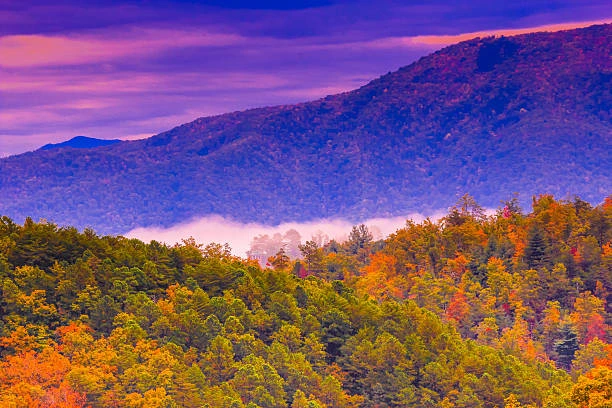
Early autumn is one of the most rewarding times for photography in Pigeon Forge and the Great Smoky Mountains. As summer gradually gives way to fall, mountain landscapes begin developing golden, yellow, orange, and red tones. Photographers can capture colorful forests, scenic overlooks, winding roads, streams, historic buildings, and panoramic mountain views. For travelers searching for Early Autumn Photography Locations, Pigeon Forge provides access to a wide variety of beautiful places within a short drive.
A comfortable vacation rental can make a photography trip even easier. Guests staying at Pigeon Forge Large Cabins can use their cabin as a relaxing base between sunrise and sunset photography sessions. With different elevations throughout the Smokies, visitors can also explore locations where autumn colors appear at different times.
Why Early Autumn Is Perfect for Photography
Early autumn offers something different from the peak fall-color season. Instead of seeing every tree covered in bright foliage, photographers can capture a mixture of summer greenery and the first changing leaves. This creates natural contrast and adds depth to landscape photographs.
According to the National Park Service fall color guide, higher elevations in the Great Smoky Mountains can begin showing autumn color earlier than lower elevations. This makes September and early October especially interesting for photographers who want to follow the progression of seasonal color.
Early autumn can also bring comfortable daytime temperatures and changing weather conditions. Morning mist, cloudy skies, warm afternoon sunlight, and mountain haze can all create unique compositions.
Instead of focusing only on individual leaves, try photographing the entire landscape. A colorful tree in the foreground, a mountain ridge in the background, and a winding road through the valley can create a much stronger travel photograph.
Newfound Gap for Early Mountain Colors
Newfound Gap is one of the best places to begin an early-autumn photography trip. Located along Newfound Gap Road, the area provides spectacular views across the Smoky Mountain ridges.
Because of its elevation, Newfound Gap can show signs of fall color before many lower areas. Photographers can look for combinations of colorful trees, evergreen forests, distant mountains, and dramatic skies.
The official Newfound Gap information from the National Park Service provides useful information for planning a visit.
A wide-angle lens is ideal for capturing expansive views, while a telephoto lens can compress distant mountain ridges. Early morning can provide softer light and fewer visitors, while late afternoon can produce warmer tones.
When photographing from overlooks, always remain in designated areas and be aware of changing mountain weather.
Kuwohi for Panoramic Photography
Kuwohi, formerly known as Clingmans Dome, is another excellent option for photographers looking for high-elevation scenery. As the highest point in the Great Smoky Mountains National Park, it provides expansive views over the surrounding mountain ranges.
The high elevation makes this area especially interesting during the beginning of fall. Color can appear at higher elevations before moving toward the valleys.
Photographers should be prepared for cooler temperatures at the summit, even when conditions in Pigeon Forge are warm. A jacket, comfortable shoes, extra camera batteries, and protection for photography equipment are useful additions to your daypack.
Clouds and fog can also transform the landscape. Rather than considering cloudy weather a problem, photographers can use atmospheric conditions to create dramatic mountain images.
Foothills Parkway for Scenic Fall Photography
Foothills Parkway is an excellent destination for travelers who enjoy combining a scenic drive with photography. The route offers multiple overlooks where visitors can stop and photograph mountain ridges, forests, valleys, and changing foliage.
During early autumn, the landscape can show a mixture of green and developing fall colors. This makes the area especially attractive for photographers who prefer subtle seasonal changes rather than only peak foliage.
Try using the road itself as a leading line. Curving pavement can guide the viewer’s eye toward distant mountains or colorful forests. Overlooks can also provide excellent opportunities for panoramic compositions.
For photographers staying in Pigeon Forge, Foothills Parkway can easily be included in a larger itinerary that combines mountain photography with local attractions and dining.
Look Rock for Wide Mountain Views
Look Rock provides another opportunity to capture expansive mountain scenery. The elevated viewpoint allows photographers to photograph layers of ridges and valleys stretching across the landscape.
Early autumn is particularly appealing here because individual patches of changing foliage can stand out against surrounding green forests.
The Tennessee State Parks website is a useful official resource for learning more about scenic areas and outdoor destinations across Tennessee.
Try visiting around sunrise or sunset when the lower-angle sunlight can add depth to mountain ridges. If conditions are hazy, use a longer focal length to emphasize distant layers.
A tripod can also be useful when photographing during low-light periods.
Cades Cove for Foliage and Historic Photography
Cades Cove is one of the most versatile photography destinations in the Smokies. The valley combines mountain scenery with historic cabins, churches, open fields, forests, streams, and wildlife.
The official Cades Cove guide from the National Park Service explains the area’s scenic loop and historic attractions.
For photographers, Cades Cove provides many different compositions. You might photograph a historic cabin surrounded by changing trees, a mountain ridge beyond an open meadow, or a fence leading toward a colorful forest.
The 11-mile loop can take considerably longer than expected when traffic is heavy or when visitors stop at overlooks and historic sites. Arriving early can help photographers take advantage of softer light and a quieter atmosphere.
Remember to follow park rules and use designated parking areas when stopping for photographs.
Roaring Fork Motor Nature Trail
Roaring Fork Motor Nature Trail is an excellent choice for photographers who prefer intimate forest scenes. Instead of focusing mainly on distant mountain views, this scenic route offers streams, bridges, historic buildings, dense forests, and winding roads.
Early autumn colors can create beautiful compositions throughout the forest. Look for fallen leaves beside streams, sunlight passing through tree branches, old cabins framed by foliage, and colorful leaves reflected in water.
The National Park Service Roaring Fork information can help visitors understand seasonal access and planning considerations.
A polarizing filter can be particularly helpful around streams because it can reduce reflections and make wet rocks and foliage more visible.
Little River Road for Water and Fall Colors
Little River Road provides an excellent opportunity to combine water photography with autumn foliage. The road follows the Little River through the park, offering numerous opportunities to photograph flowing water surrounded by forest.
Water can become an important foreground element in autumn photographs. Try positioning colorful trees behind a stream or using rocks to create depth.
A slower shutter speed can create a soft, flowing-water effect, while a faster shutter speed can freeze individual splashes.
The Great Smoky Mountains National Park road information is useful for checking current conditions before setting out.
Photographers should avoid standing in unsafe locations near fast-moving water and should remain aware of slippery rocks.
Wears Valley for Scenic Mountain Photography
Wears Valley is another attractive area for photographers who want mountain landscapes without spending the entire day inside the national park. The valley provides views of surrounding ridges, farms, roads, forests, and changing foliage.
The combination of open land and mountains makes it easier to create layered compositions. A barn, fence, country road, or field can become a strong foreground element while autumn-covered mountains provide the background.
The Town of Wears Valley provides local information that can help visitors explore the area.
Wears Valley can also be paired with a drive along Foothills Parkway, making it a convenient addition to a photography-focused day.
Pigeon Forge for Convenient Autumn Photography
Photographers do not have to travel deep into the mountains for every photograph. Pigeon Forge itself offers opportunities to capture seasonal scenery, mountain backgrounds, local architecture, attractions, and autumn decorations.
One advantage of staying in the area is flexibility. After an early morning photography session, you can return to your cabin for breakfast and rest before heading out again in the afternoon.
For travelers planning a fall trip, the fall foliage guide from Pigeon Forge Large Cabins provides additional ideas for experiencing the changing colors throughout the Smokies.
A cabin stay can also give photographers room to organize camera equipment, charge batteries, back up photographs, and prepare for the next day’s adventure.
Best Times to Photograph Early Autumn Colors
Timing is an important part of successful fall photography.
Early morning: Sunrise provides soft light, fewer crowds, and the possibility of mist in valleys and forests.
Late afternoon: Warm afternoon light can make yellow and orange foliage appear richer.
Golden hour: The low angle of the sun can highlight mountain ridges and create long shadows across the landscape.
Overcast days: Cloudy conditions can produce soft, even light that works especially well for close-up foliage and forest photography.
Photographers should also consider elevation. Since fall color progresses through the mountains at different elevations, visiting a high-elevation viewpoint one day and a lower valley the next can provide very different results.
Photography Tips for Smoky Mountain Fall Colors
A few simple techniques can improve your autumn photographs:
- Bring both wide-angle and telephoto lenses.
- Use a tripod for sunrise and sunset photography.
- Shoot in RAW format when possible.
- Look for reflections in streams and ponds.
- Use roads, fences, and trails as leading lines.
- Include foreground objects to create depth.
- Photograph mountain layers with a telephoto lens.
- Check the weather before visiting high elevations.
- Carry extra camera batteries.
- Protect camera equipment from rain and sudden temperature changes.
Most importantly, slow down. Some of the best photographs may come from unexpected details rather than famous overlooks.
Plan a Photography-Friendly Cabin Stay
A successful photography vacation is about more than finding beautiful locations. Having a comfortable place to return to can make the entire experience more enjoyable.
Choosing a Pigeon Forge cabin gives travelers an opportunity to create a flexible schedule around sunrise, sunset, weather, and changing foliage conditions.
Instead of rushing between destinations, photographers can plan one major morning outing, return for a break, and head back out later when lighting conditions improve.
This flexibility is particularly valuable during early autumn because foliage can change quickly and weather conditions may affect visibility.
Final Thoughts on Early Autumn Photography Locations
The Smoky Mountains provide an impressive variety of Early Autumn Photography Locations, from high-elevation viewpoints and scenic parkways to historic valleys, forest roads, streams, and mountain communities.
Newfound Gap and Kuwohi are excellent choices for early high-elevation color, while Foothills Parkway and Look Rock offer broad mountain views. Cades Cove provides a mixture of foliage and historic scenes, while Roaring Fork and Little River Road are ideal for intimate forest and water photography.
Because fall color develops gradually, photographers should remain flexible and explore different elevations. The National Park Service fall color information can help visitors understand how seasonal color typically progresses through the Smokies.
After a day of photography, returning to a comfortable vacation rental can make the experience even better. Pigeon Forge Large Cabins provides a convenient base for travelers who want to explore the region’s scenic landscapes while enjoying a relaxing cabin stay.